Best Home Sound Booths UK 2025: Top Picks for Every Budget
If you're recording podcasts, voiceovers, music or streaming from home, a dedicated sound booth cuts background noise and improves audio quality dramatically. But the market ranges from basic foam panels to professional isolation pods costing thousands, and most people don't need the premium tier.
This guide breaks down the main types—freestanding pods, portable vocal booths, and isolation shields—across realistic budgets so you can find what actually suits your space and wallet.
Under £500: Portable Tents and Budget Shields
Vocal isolation tents are the entry point most home recordists start with. These fabric-wrapped frames fold down to suitcase size and cost £150–£350. They're brilliant if you're renting, record sporadically, or share your space. The trade-off is honest: they kill high-frequency reflections but don't isolate low-end rumble or neighbour noise.
Look for models with acoustic foam lining at least 25mm thick and a sturdy metal frame that won't rattle when you touch the mic. Some fold into a tripod stand, which saves floor space if you're cramped.
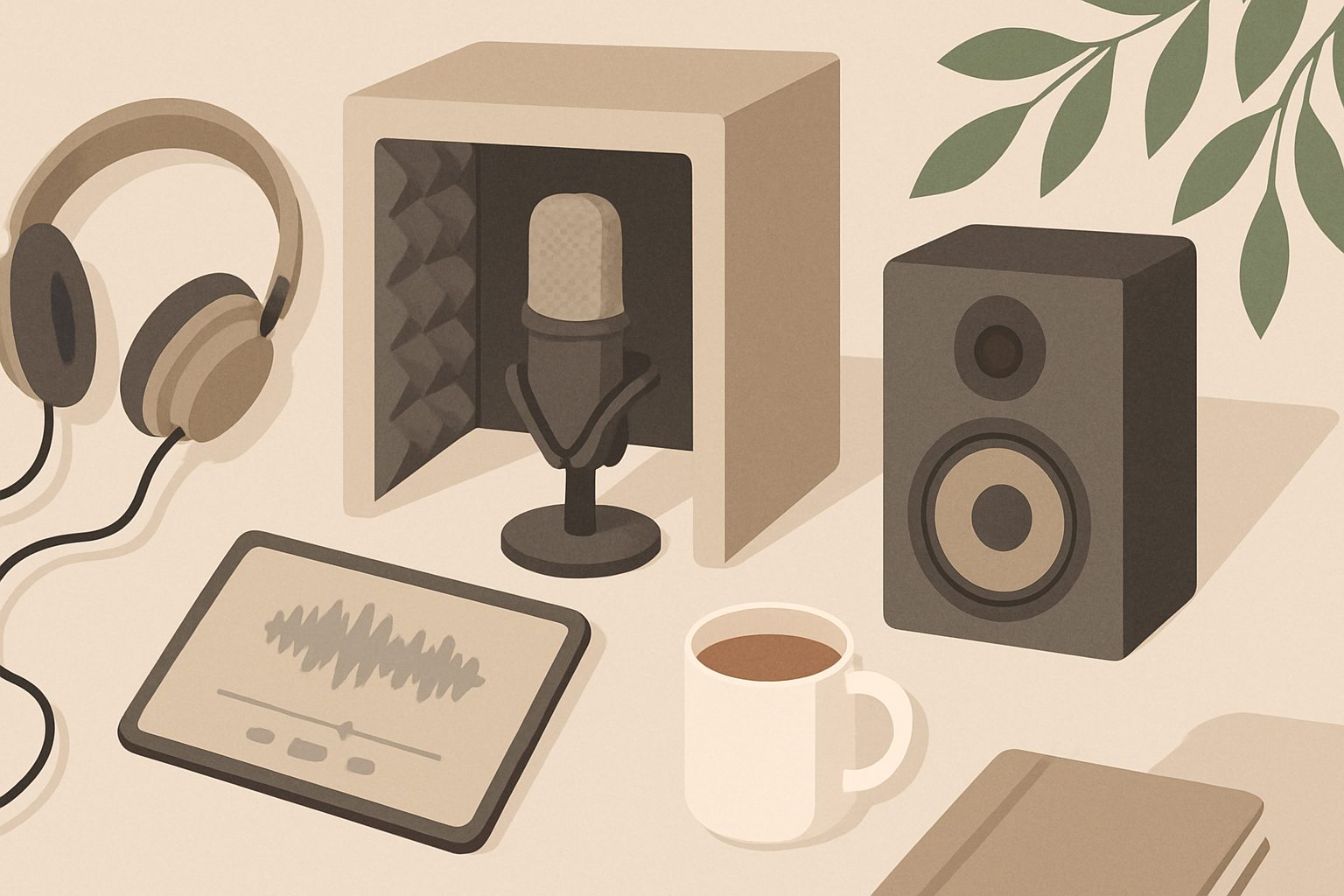
Isolation shields (desk-mounted foam screens behind the microphone) sit in this bracket too. At £80–£250, they're cheaper than tents and take minimal space—just clamping to your desk or mic arm. They work well for harsh sibilance and some room reflection but won't treat the whole space. They're ideal if you're recording voiceovers or singing takes in a bedroom corner.
Reality check: Budget options absorb sound well but reflect what they don't absorb back into your recording. A tent in a hard-walled room still sounds echo-y. You'll get noticeably better results than raw room recording, but don't expect studio-quality isolation.
£500–£2,500: Semi-Professional Portable Pods
This tier includes collapsible vocal boxes and smaller freestanding pods that genuinely isolate. Models like Voiceover booths with 50mm+ acoustic treatment and sturdy hinged frames run £600–£1,800. They're portable (you can move them between rooms) but heavy—expect 30–50kg.
Advantages: They treat multiple sides at once, cutting reflected noise significantly. Many fit a small desk inside for a laptop or microphone. Some models have ventilation to stop them getting warm during long sessions.
Drawbacks: They're noticeable in a room and look industrial. Setup takes 10–15 minutes if you're building and breaking down regularly. They don't seal against external noise—sound still travels through walls and floors.
This is where serious home recordists with decent recording budgets typically land. You'll hear a genuine difference over budget booths, especially if you're doing podcast editing or music production where clean vocals matter.
£2,500–£10,000: Full Freestanding Isolation Pods
Professional freestanding booths—often called iso pods—start here. These are permanent or semi-permanent installations with full acoustic treatment on all six sides. They typically measure 1.5m × 1.5m or larger, weigh 100kg+, and require serious floor space.
What you get: Genuine isolation from external noise. A well-built pod with 100mm+ acoustic lining and a sealed, floating floor stops low-frequency rumble from traffic, rain on windows, and upstairs footsteps. Interior treatments prevent reflections, giving you dry, controllable sound.
Who should buy: Professional voice actors, music producers, content creators recording full-time, or studios needing multiple isolated spaces. If you're recording client work where audio quality is non-negotiable, this pays for itself.
The catch: You're committing floor space permanently. Installation can take hours. Some require assembly, though premium models arrive ready-to-use. Prices vary wildly depending on materials, ventilation, and whether they're bespoke or modular.
Key Things to Check
Acoustic absorption vs. isolation. Absorption stops sound bouncing around inside the booth. Isolation stops outside noise getting in. Budget booths do absorption well. Only expensive, well-sealed pods with mass-loaded barriers truly isolate from external noise.
Ventilation. If you're recording long sessions, you'll need airflow or the booth gets warm and stuffy. Better models include acoustic ducting or active ventilation.
Noise floor. Even in a perfect booth, your equipment—PC fans, hard drives, electrical hum—becomes noticeable. Invest in a quiet recording setup.
Room acoustics. A booth doesn't fix a bad room. Reflective surfaces, parallel walls, and untreated spaces around the booth still matter. Most professionals treat the whole recording space, not just the booth.
Honest Verdict
If you record fewer than five hours weekly and space is tight, a £200–£400 vocal tent handles basic podcasts and voice work. If you're serious—music production, regular voiceovers, streaming—spend £1,000–£2,000 on a semi-pro portable pod.
Full isolation pods make sense only if you need professional-grade isolation and have dedicated space. Don't buy one hoping it'll fix bad recording habits or cheap microphones. A decent USB condenser mic in a proper booth beats a Neumann in a tin shed.
Your room matters as much as your booth. Start small, treat reflective surfaces, and upgrade only when recording quality genuinely holds you back.
More options
- Portable Vocal Isolation Tents & Pop-Up Recording Booths (Amazon UK)
- Microphone Reflection Filters & Desktop Isolation Shields (Amazon UK)
- Acoustic Foam Panels & Bass Traps for Home Studios (Amazon UK)
- Freestanding Acoustic Office Pods & Soundproof Cabins (Amazon UK)
- Mass Loaded Vinyl & Soundproofing Barriers (Amazon UK)