Best Portable Vocal Booths for Travelling Musicians UK 2025
Recording vocals on the road is a reality for touring musicians, session singers, and gigging acts. Whether you're a folk artist doing house-show recordings, a touring metal band capturing ideas between gigs, or a session vocalist taking jobs in unfamiliar spaces, you need something that travels light, sets up fast, and actually deadens reflections. The problem with most "portable" vocal booths is they're either glorified tents that sound hollow, or proper isolation that requires a van and an extra pair of hands.
The sweet spot for working musicians is a fold-flat pop-up booth or collapsible shield system—gear that fits in a gig bag, weighs under 5kg, and takes under two minutes to deploy in a hotel room, green room, or practise space.
Pop-up Vocal Tents: The Serious Option
True portable pop-up vocal booths (not the £40 photography ones) use specialist acoustic foam or blanket lining over a spring-steel or magnetic frame. They're basically geodesic domes that compress to the size of a large hula hoop.
The advantage here is genuine sound isolation. You get walls on four sides, a ceiling, and often a porthole for your microphone. In a hotel room with hard surfaces, this actually works. You're not going to get professional studio isolation, but you'll eliminate 60–70% of room reflections and ambient noise, which is the difference between an unusable take and something you can work with.
The catch is rigidity. Some models use plastic hoops that flex too much—the fabric stretches, you lose structural integrity, and bass frequencies leak. Better ones use sturdier frames: hinged metal or reinforced composites. You'll pay £300–600 for a proper one, and it'll take up a decent chunk of tour luggage.
Weight-wise, quality pop-up booths run 4–5kg. That's roughly a large PA speaker—manageable if you're driving, less so if you're flying regularly. If portability is everything, this might be heavier than you need. If sound quality is the priority and you're touring by van, it's worth it.
Setup is genuinely quick—usually under 90 seconds. You snap or pop the frame open, pull it taut, and you're recording. Teardown is the same in reverse. Most models compress back into a flat disc about 70cm across and 10cm thick.
Collapsible Shield Systems: The Lightweight Compromise
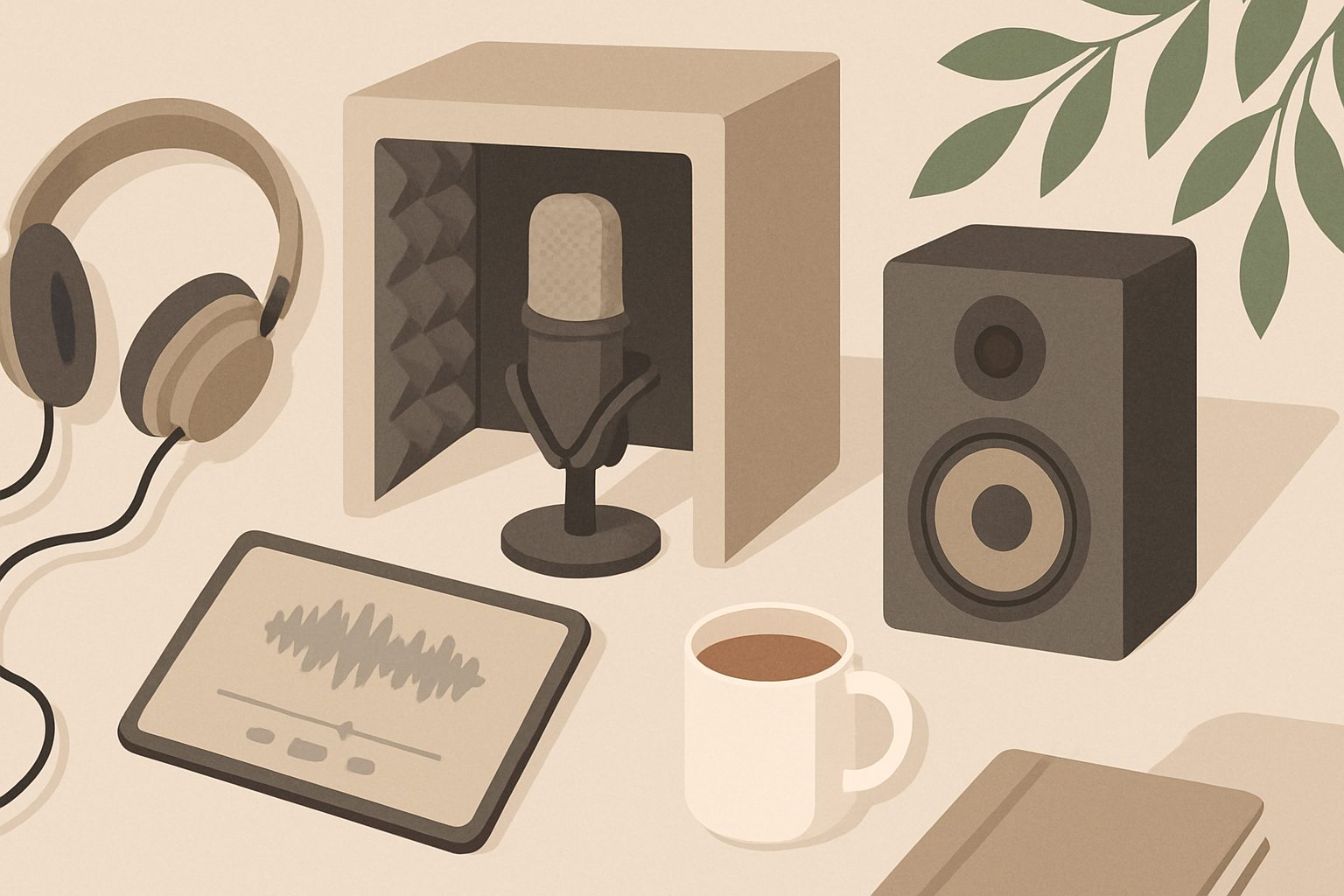
Collapsible acoustic shields are smaller, lighter, and cheaper, but they only isolate three sides. They look like portable music stands with thick fabric panels that fold out.
A single shield (roughly 1.2m wide, 0.6m tall) weighs 1–2kg and costs £100–250. Some musicians use two or three arranged around a mic stand to create a partial booth effect—not full isolation, but significantly less room noise bleed.
The honest truth is these work best when you're already in a decent space. They're brilliant for taming reflections in a treated room or reducing SPL spillback to a single overhead mic in a loud band rehearsal. But if you're recording vocals in a bare hotel room with hard walls, a three-sided shield will still let you hear the room—you've just dampened it slightly.
What they do excel at is simplicity and weight. If you're flying to session work or busking with a recording setup, a lightweight shield is infinitely easier to carry than a full booth. Setup takes 30 seconds. You can hang them on any stand or brace.
The material matters. Budget shields use thin foam or felt that compresses with use and loses absorption. Better ones use rockwool-core panels or acoustic foam with a facing that resists packing damage. Look for panels at least 5cm thick if you want them to do any real work.
Hybrid Approach: Shield Plus Blankets
Many working musicians skip dedicated booths entirely and use a collapsible shield plus heavy moving blankets draped over a frame. This is genuinely cheap (£40–100 total) and surprisingly effective.
Blankets lack the acoustic properties of engineered foam, but they absorb mid and high frequencies reasonably well. The advantage is flexibility: you can hang them where you need them, adjust coverage on the fly, and pack them in almost nothing. The disadvantage is it looks a bit DIY and takes more fiddling to get right.
This works well if you're working in a space you can control—your own band's practise room, a friend's studio—but it's less reliable for one-off locations.
What Actually Matters for Touring
Portability vs. isolation is the real trade-off. A proper pop-up booth gives you professional-grade results but adds weight and luggage space. A shield gives you convenience but assumes you're already in a half-decent space.
Consider your realistic use case. Are you recording in controlled environments (your tour bus, a hired studio, a bandmate's room) where room acoustics are at least neutral? A shield works. Are you doing session work in random spaces where sound quality is everything? A proper booth pays for itself in one or two professional gigs where you nail the vocal without fifty retakes.
Build quality matters more than brand names. Look for reinforced frames, acoustic foam (not felt or blanket), and seams that won't tear after three months of touring. Read reviews from musicians actually using these on the road—not YouTubers filming in perfect studios.
Most importantly, test your setup in your real environment. What works in a treated rehearsal room might not cut it in a noisy venue. Pick something you'll actually use rather than something that sits in a cupboard because setup's a faff.
More options
- Portable Vocal Isolation Tents & Pop-Up Recording Booths (Amazon UK)
- Microphone Reflection Filters & Desktop Isolation Shields (Amazon UK)
- Acoustic Foam Panels & Bass Traps for Home Studios (Amazon UK)
- Freestanding Acoustic Office Pods & Soundproof Cabins (Amazon UK)
- Mass Loaded Vinyl & Soundproofing Barriers (Amazon UK)