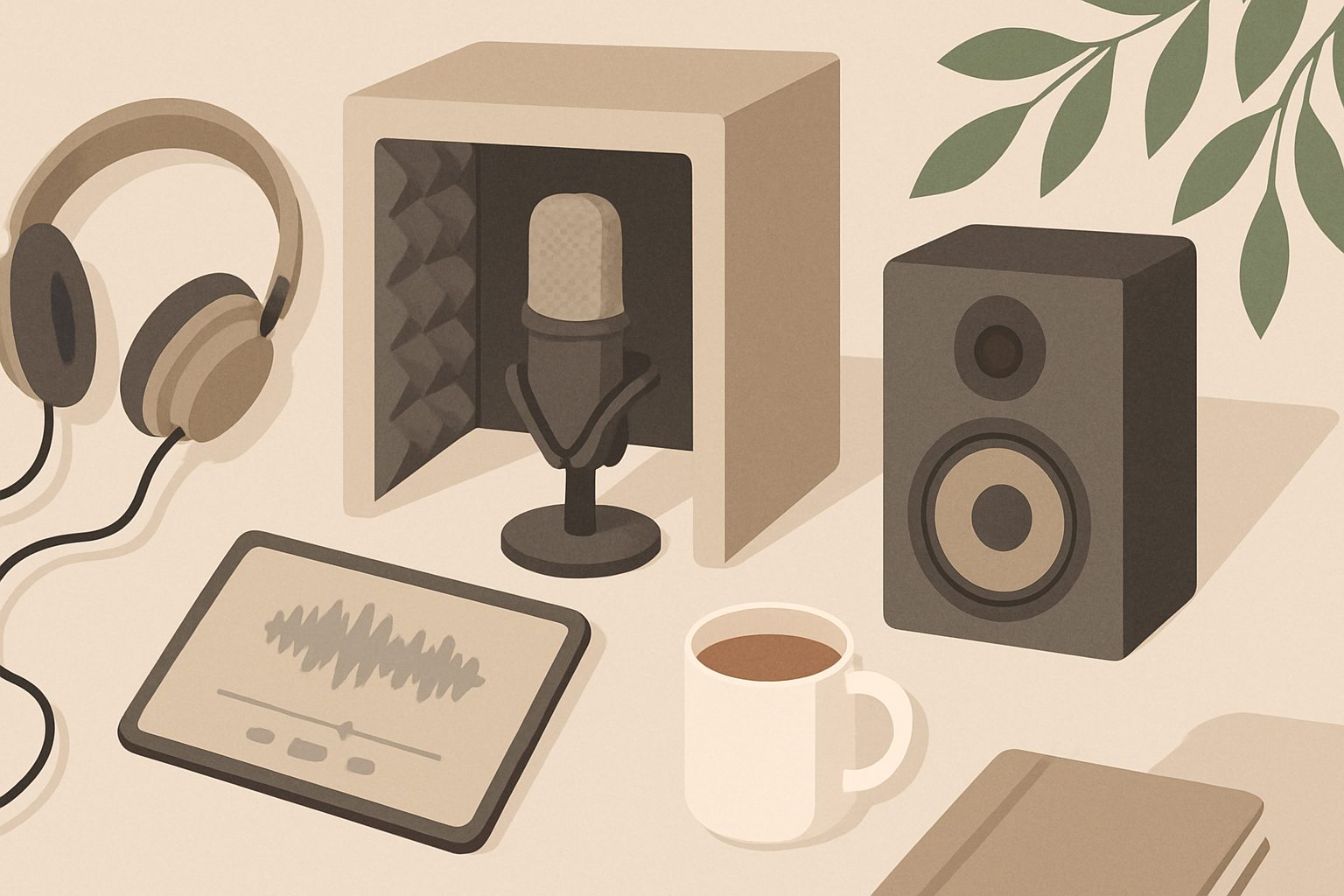
Best Home Sound Booths for Podcasting UK: Quiet Recordings, Tight Budget
Recording podcasts at home is cheaper than renting studio time, but it comes with a genuine problem: reflections and ambient noise. Even a well-treated room won't stop outside traffic or housemates moving about. A dedicated sound booth addresses this directly—it's a controlled recording space that keeps unwanted sound out and treats reflections inside. The catch is cost and space. This guide covers the practical options for UK podcasters recording solo shows on a realistic budget.
Why You Actually Need Sound Treatment
A microphone picks up everything: your voice bouncing off hard walls, keyboard clicks, the fridge humming two rooms over, someone hoovering upstairs. Professional mics are sensitive—that's their job. Blankets help, but not enough. Proper acoustic treatment absorbs reflections so your voice sounds natural rather than hollow. It also isolates you from external noise better than a closed bedroom door.
Vocal Tents and Reflection Filters
The smallest option is a reflection filter or vocal tent—a curved shield that sits behind your microphone. These typically cost £30–150 and fold up when not in use, which matters if you're sharing studio space with a sofa.
How they work: Sound bounces off your microphone and the shield absorbs it rather than reflecting back into the mic. They also catch some room reflections behind you. They don't block external noise; they reduce it slightly because you're speaking into a narrower space.
Honest assessment: They're useful for taming room reflections on a tiny budget. They won't stop traffic noise or someone vacuuming downstairs. If your room is already relatively quiet and you're mainly fighting hollow-sounding recordings, a filter works. Many UK podcasters start here because the outlay is minimal and they do provide noticeable improvement.
Popular UK options: The Audio Technica AT875R and similar small-diaphragm mics pair well with basic reflection filters. Standalone shields from brands like Neewer cost £40–80 and do the job without breaking the bank.
Compact Portable Booths
Portable vocal booths are roughly the size of a small wardrobe—tall enough to stand in or sit at a desk, with acoustic foam on the inside surfaces. They're semi-enclosed, not fully sealed, but they treat reflections and dampen external sound noticeably. Prices range from £150 to £600.
How they work: You record inside the booth. The foam lining absorbs reflections; the enclosure reduces external noise by 10–20 dB depending on the design. Better booths have thicker foam and structural bracing so they don't move around when you shift your microphone.
What works in reality: These are genuinely useful for home podcasting. They reduce reverb so your voice sounds tight and professional. External noise—traffic, other rooms—is reduced but not eliminated. A passing lorry will still be audible. They work best when the booth is placed away from walls (so sound doesn't bounce back) and in the quieter room of your house.
Space and practicality: They occupy roughly one square metre of floor space when assembled. They pack down reasonably well, though they're not "fold up and store" small. British homes often lack dedicated studio space, so you'll probably set it up in a bedroom or corner of a living room. That's fine—they're designed for this. Ventilation inside the booth is a real consideration; some people add a small USB fan because sitting inside with the door closed gets warm.
Home Sound Booths (Larger Setups)
Larger home booths—freestanding, walk-in pods—cost £400–2,000+ in the UK. These are genuinely quiet recording spaces: insulated, with acoustic treatment on all interior surfaces, sometimes with a window and internal lighting. Some include a desk; some are just an empty pod you furnish yourself.
What you're actually paying for: Proper sound isolation. These have genuine mass—thicker walls, multiple material layers—which blocks external noise far more effectively than a portable booth. The trade-off is space and money. These suit serious podcasters or studios doing regular sessions. For a solo hobbyist recording two hours a week in a bedroom, they're overkill.
Realistic Budget Breakdown
- Under £100: Reflection filter. Handles room reflections; external noise still present.
- £150–400: Portable acoustic booth. Noticeable isolation and reflection treatment; practical for most home setups.
- £400+: Larger booth or room treatment. Full isolation; significant space commitment.
Practical Tips for UK Home Recording
Treat your existing space first. Before buying a booth, add absorbent materials: acoustic panels on walls, a heavy curtain, a rug on hard floors. These cost less and improve most rooms. Many UK podcasters combine a reflection filter with basic room treatment rather than investing in an expensive booth.
Check for external noise sources. Walk around your house at the time you record and listen for constant sounds—radiators, fridges, traffic patterns, neighbours. Pick the quietest room. A booth helps, but it can't eliminate a major noise source outside.
Microphone placement matters. A decent USB or XLR microphone designed for voice (cardioid pattern) will reject off-axis noise better than an omnidirectional one. Positioning it correctly—close to your mouth, away from hard surfaces—does more than many people realise.
Ventilation and comfort. Inside a sealed booth, you get warm. Consider airflow before you buy. Some people prop the door open when not recording or add ventilation. This matters for longer sessions.
The Honest Verdict
For UK podcasters on a tight budget, start with a basic reflection filter (£40–80) and improve your room—panels, curtains, soft furnishings. If external noise is a real problem or you're recording regularly, upgrade to a portable acoustic booth (£200–400). A small booth isolates you better than anything cheaper and is practical for home use. Larger pods suit professional studios or serious content creators with dedicated space and budget.
The key is matching the solution to your actual problem. If your room sounds hollow, a filter helps. If noise from outside or other rooms is the issue, you need at least a portable booth. Test your current setup first—record a sample and listen critically. You might be surprised how much room treatment alone can achieve before spending hundreds on a booth.
More options
- Portable Vocal Isolation Tents & Pop-Up Recording Booths (Amazon UK)
- Microphone Reflection Filters & Desktop Isolation Shields (Amazon UK)
- Acoustic Foam Panels & Bass Traps for Home Studios (Amazon UK)
- Freestanding Acoustic Office Pods & Soundproof Cabins (Amazon UK)
- Mass Loaded Vinyl & Soundproofing Barriers (Amazon UK)